
Choosing renovation materials: a homeowner's guide

TL;DR:
Choosing renovation materials involves evaluating their performance, cost, durability, maintenance, aesthetics, and environmental impact for each project role.
Homeowners should assess local climate, household habits, and test samples in their actual home to ensure long-lasting and suitable choices.
Proper planning and professional guidance help avoid costly mistakes, ensuring materials perform well over time and match the home’s specific conditions.
Choosing renovation materials is defined as the process of selecting products based on their function, durability, aesthetic appeal, and maintenance requirements to suit your home’s specific conditions. Get this right and your renovation adds lasting value. Get it wrong and you face costly replacements within a few years. The best material selection process balances performance criteria, lifecycle costs, and real-world use conditions rather than showroom appeal alone. This guide covers the key factors, evaluation methods, common pitfalls, and the best material types for each area of your home.
What factors should you consider when choosing renovation materials?
No single material is best for every situation. The right choice depends on clearly defining each material’s role and then scoring it across six dimensions: performance, total cost, durability, maintenance, aesthetics, and environmental impact.
Start by identifying the material’s role in your project. Construction professionals classify materials into four categories:
Structural materials bear loads and must meet strength and fire resistance standards such as ASTM E119, which governs fire resistance ratings for building elements.
Envelope materials protect against weather, moisture, and heat loss. Performance here directly affects your energy bills.
Finish materials define the look and feel of a space. These include flooring, wall coverings, and countertops.
Landscape materials face outdoor exposure and require high weather and UV resistance.
Once you know the role, evaluate each candidate against these criteria:
Performance: strength, fire resistance, moisture tolerance, and thermal properties
Total cost: purchase price plus installation, maintenance, and eventual replacement
Durability: expected lifespan under your home’s actual conditions
Maintenance: cleaning frequency, specialist products required, and repair complexity
Aesthetics: how the material looks now and how it ages over five to ten years
Environmental impact: embodied carbon, recyclability, and sourcing ethics
Pro Tip: Ask your supplier for the technical data sheet, not just the brochure. Data sheets list actual performance figures, whereas brochures list marketing claims.
A full property renovation guide can help you map these criteria against each room before you commit to any purchases.
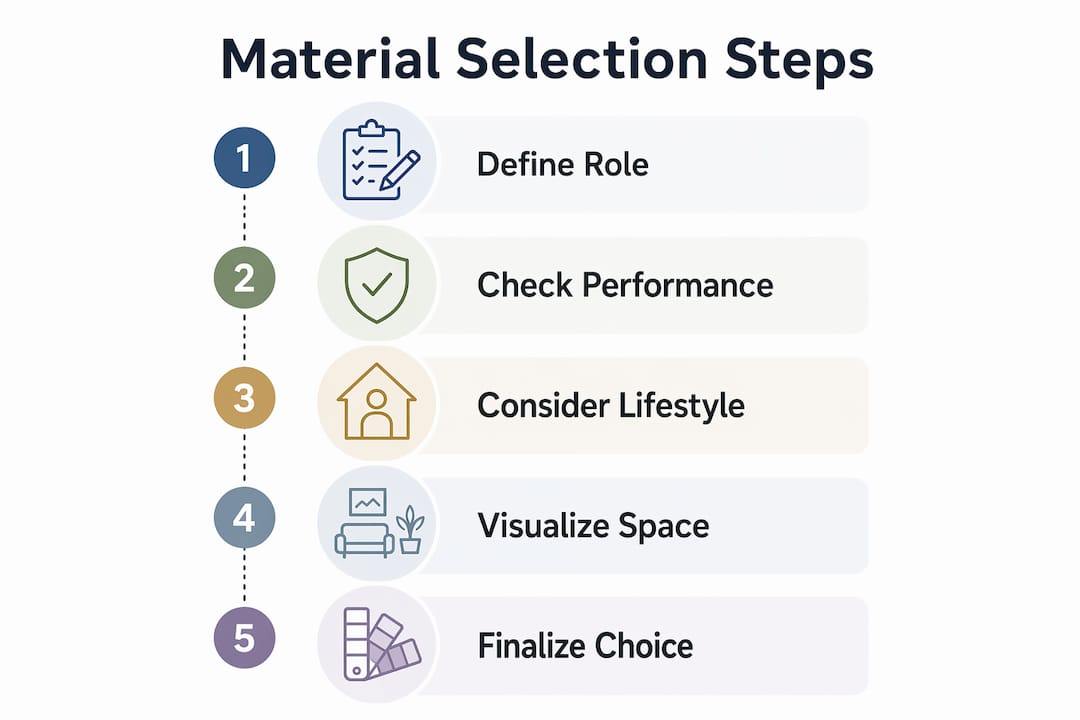
How to evaluate materials based on your home and lifestyle

The most common mistake homeowners make is choosing materials that look perfect in a showroom but perform poorly in their actual home. Real-world use context determines value and longevity far more than short-term appearance.
Follow these steps to evaluate materials accurately:
Assess your local climate and exposure. London’s damp climate means moisture resistance is non-negotiable for bathrooms, kitchens, and ground-floor spaces. Materials rated for dry climates will degrade faster in humid conditions.
Account for your household’s daily habits. Homes with young children, pets, or frequent cooking need surfaces that resist scratches, stains, and heavy cleaning. A pale, polished marble countertop looks stunning but requires sealing every six to twelve months and chips under impact.
Use the Mohs hardness scale for countertops. Quartz scores 7 on the Mohs scale and resists stains and wear better than granite, which scores 6–7 but is more porous. For a busy kitchen, quartz is the more practical choice. You can compare stone options in detail through this marble vs. quartzite guide.
Score your shortlisted materials across all six criteria. Create a simple grid with your top three candidates as columns and the six criteria as rows. Score each from one to five. The highest total rarely wins on aesthetics alone.
Test samples in your actual home. Materials look different in your home’s unique light compared to a showroom. Place samples in their intended location and observe them at different times of day, in both natural and artificial light, and in their installed orientation (vertical for wall tiles, horizontal for flooring).
Factor in lead times and local availability. A material that takes sixteen weeks to arrive can stall your entire project. Confirm stock levels before finalising your specification.
Pro Tip: Use 3D design visualisation before purchasing. Seeing materials rendered in your actual room dimensions prevents costly aesthetic mismatches. Tenenltd’s approach to 3D design in renovations shows how this works in practice.
What are the best practices to avoid common mistakes?
The most expensive renovation errors come from decisions made on appearance and price alone. Avoiding them requires a more disciplined approach.
Do not rely on social media trends. Homeowners frequently mistake showroom or social media appeal for practical performance. A material trending on design platforms may be poorly suited to your climate, household, or budget for upkeep.
Read warranty exclusions carefully. A 25-year warranty does not guarantee low maintenance. Most warranties exclude damage from improper installation, humidity fluctuations, or cleaning products. Read the technical data sheet to understand what the warranty actually covers.
Check legal and code requirements before purchasing. Some materials require permits or must meet specific fire resistance standards such as ASTM E119. Ignoring these requirements can result in forced removal and significant additional cost.
Prioritise proven durability over novelty. New materials often lack the long-term performance data that established products carry. If a product has been on the market for fewer than five years, ask for independent test results.
Consider reclaimed materials. Reclaimed wood, brick, and metal offer proven durability and lower environmental impact than many modern alternatives. They also add character that new materials rarely replicate, which is particularly valuable in period properties across West London.
For period homes, the period property renovation guide covers how to balance preservation requirements with modern material upgrades.
Which materials offer the best balance of quality and durability?
The best renovation materials vary by application. The table below covers the most common renovation categories and the top-performing options in each.
Area | Recommended material | Why it performs well |
Flooring (wet areas) | Porcelain tile | High water resistance, low maintenance, and long lifespan |
Flooring (living spaces) | Luxury vinyl plank | Moisture resistant, durable underfoot, and cost-effective |
Countertops (kitchens) | Quartz | Mohs score of 7, non-porous, stain resistant, low maintenance |
Countertops (lower traffic) | Granite | Natural beauty, durable, requires periodic sealing |
Insulation | Hempcrete or cork | Hempcrete saves up to 30% on HVAC costs and carries a flame spread score of 0 |
Cabinetry | Solid wood or MDF | Solid wood lasts longer; MDF offers a smooth finish at lower cost |
Structural elements | Recycled steel or engineered timber | High strength, lower embodied carbon than virgin steel or concrete |
Flooring accounts for around 70% of a typical living space renovation budget. That proportion means flooring decisions carry more financial weight than almost any other material choice. Porcelain tile and luxury vinyl plank both outperform carpet and laminate in moisture-heavy environments, making them the default choice for London kitchens and bathrooms.
For insulation, sustainable options like cork and sheep’s wool are now mainstream with established supply chains and measurable energy savings. These are no longer niche choices. They are practical, well-tested, and increasingly cost-competitive. A broader overview of construction material types can help you understand the full range of options across structural, finish, and envelope categories.
For flooring decisions specifically, Tenenltd’s analysis of flooring in West London refurbishments shows how the right choice directly affects both property value and long-term satisfaction.
Key takeaways
Choosing renovation materials well requires matching each material to its specific role, your home’s conditions, and your household’s daily habits rather than selecting on appearance alone.
Point | Details |
Define the material’s role first | Classify each material as structural, envelope, finish, or landscape before comparing options. |
Score across six criteria | Evaluate performance, total cost, durability, maintenance, aesthetics, and environmental impact for every candidate. |
Test samples at home | Place samples in their installed location and observe them at different times of day before committing. |
Read warranties carefully | Check exclusions in technical data sheets, not just headline warranty lengths. |
Prioritise proven durability | Reclaimed materials and established products carry performance data that newer alternatives often lack. |
What I’ve learned from years of watching renovations succeed and fail
The renovations that hold up best over time share one quality: the homeowner made decisions based on how they actually live, not how they imagined they might live. I’ve seen beautiful marble kitchens scratched and stained within eighteen months because the family cooked every day and had two dogs. I’ve seen budget luxury vinyl plank flooring still looking sharp after eight years because it was the right material for that household.
The industry talks a lot about trends. Fluted cabinetry, limewash walls, terrazzo tiles. These are not bad choices. But they are only good choices if they suit your home’s conditions and your tolerance for maintenance. A limewash finish in a north-facing London bathroom with poor ventilation will deteriorate quickly. The same finish in a well-ventilated, south-facing room can last a decade.
My strongest advice is this: consult a professional before you purchase, not after. The cost of a pre-purchase consultation is a fraction of the cost of replacing materials that were wrong for the job. Tenenltd has been doing this since 2006, and the most satisfied clients are always the ones who asked questions early. Longevity and low maintenance must guide your decisions. Initial cost and trends should inform them, but never lead them.
— Mateja
How Tenenltd supports your material selection and renovation
Selecting the right materials is only half the work. Installation quality determines whether those materials perform as intended for years or fail within months.
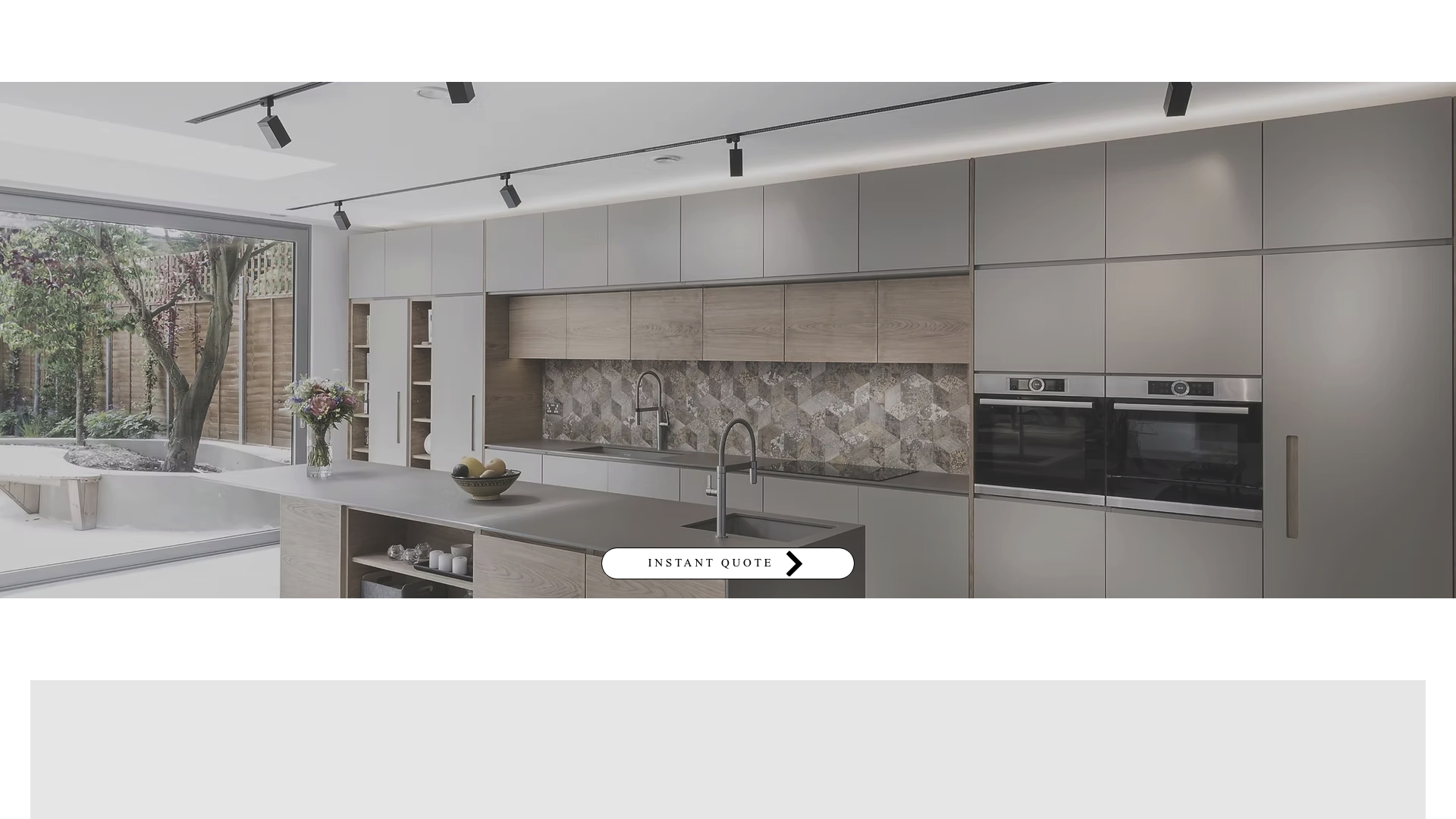
Tenenltd has been working with homeowners across West and Central London since 2006, covering Fulham, Chelsea, Kensington, Chiswick, Hammersmith, and Notting Hill. The team handles everything from home extensions and loft conversions to full refurbishments, kitchen and bathroom renovations, and specialist carpentry. Every project includes guidance on material selection tailored to your home’s structure, your lifestyle, and your budget. If you want expert advice before you commit to any materials, speak to the Tenenltd team through the full services page.
FAQ
What is the most important factor when selecting renovation materials?
The material’s role in the project is the most important starting point. Structural materials must meet strength and fire resistance standards, while finish materials should balance aesthetics with your household’s maintenance capacity.
How do I choose between quartz and granite for a kitchen countertop?
Quartz scores 7 on the Mohs hardness scale and is non-porous, making it more resistant to stains and daily wear than granite. For a busy kitchen, quartz requires less maintenance and is less likely to need early replacement.
Are eco-friendly renovation materials worth the higher upfront cost?
Hempcrete, for example, can save up to 30% on HVAC energy costs over its lifetime, which offsets the higher initial investment. Sustainable materials like cork and sheep’s wool also have established supply chains and measurable long-term benefits.
How do I avoid buying materials that look wrong once installed?
Test samples in their actual installed location at different times of day and in both natural and artificial light. Showroom lighting is designed to flatter materials, and your home’s light will look very different.
Do renovation materials need to meet legal standards in the UK?
Some materials require permits or must meet fire resistance ratings such as ASTM E119 before installation. Checking compliance requirements before purchase prevents costly forced removals and project delays.
Recommended
Comments