
Your essential kitchen renovation guide for West London

TL;DR:
Proper planning and a contingency budget are essential to avoid overspending and delays.
Durable materials like plywood for cabinets and quartz or granite for worktops ensure long-term performance.
Using a professional contractor helps coordinate trades and ensures a smooth, successful kitchen renovation.
Renovating your kitchen is one of the most rewarding investments you can make in your London home, but it is also one of the easiest to get wrong. Many homeowners in Fulham, Chelsea, Kensington, and Chiswick begin their projects with enthusiasm, only to find themselves over budget, behind schedule, or disappointed with the results. The good news is that most of these setbacks are entirely avoidable. With the right planning, material choices, and professional support, your kitchen renovation can be a smooth, exciting transformation. This guide walks you through everything you need to know, from setting clear goals and selecting durable materials to managing the build process and sidestepping the most common mistakes.
Table of Contents
Key Takeaways
Point | Details |
Prioritise clear planning | Deciding your needs and setting priorities lays the groundwork for a successful kitchen renovation. |
Invest in quality materials | Durable and sustainable components like plywood carcasses and quartz worktops last much longer and reduce hassle. |
Coordinate your team | A single main contractor or well-managed team prevents errors and keeps the project on track. |
Add a contingency budget | Setting aside at least 15% for unforeseen expenses is crucial for kitchens in London. |
Planning your renovation: setting goals and requirements
Before a single tile is removed or a cabinet ordered, you need a clear picture of what you actually want from your new kitchen. Think honestly about how you use the space. Do you need more storage? A better layout for cooking? Room for a dining table or a breakfast bar? Identifying your core needs upfront prevents costly changes mid-project.
Start by listing your priorities under two categories:
Must-have features: Adequate storage, functional worktop space, good lighting, proper ventilation, and appliances that suit your cooking habits.
Nice-to-have features: An island unit, underfloor heating, a wine fridge, premium finishes, or a utility area.
This simple exercise keeps your budget focused on what truly matters. Kitchen layout planning is particularly important in West and Central London, where properties often have unusual footprints, period features, or limited square footage.
You also need to think about timescales and budget from the very start. A typical kitchen renovation in London takes four to eight weeks, depending on the scope of work. Set a realistic overall budget and, critically, build in a financial buffer. Lack of contingency planning is one of the most cited causes of kitchen renovation stress and overspend.
Pro Tip: Always allocate at least 15% of your total budget as a contingency. Older London properties regularly reveal surprises behind walls and under floors, from outdated wiring to damp patches, that add unforeseen costs.
Here is a simple requirements table to help you organise your thinking:
Feature | Must-have | Nice-to-have | Estimated cost range |
Extra storage units | ✓ | £500 to £2,000 | |
New worktops | ✓ | £200 to £600 per m² | |
Kitchen island | ✓ | £1,500 to £5,000 | |
Underfloor heating | ✓ | £800 to £2,500 | |
Premium appliances | ✓ | £1,000 to £8,000+ |
If your property is in a conservation area or a listed building, check with your local council before making structural changes. Many homes in Kensington, Notting Hill, and Chelsea have restrictions that affect what you can alter.
Choosing durable and sustainable materials
With your goals in place, the next critical decision is your choice of materials. The materials you select will determine not only how your kitchen looks, but how well it performs over the next decade or more. In London’s busy family homes, durability is not optional.
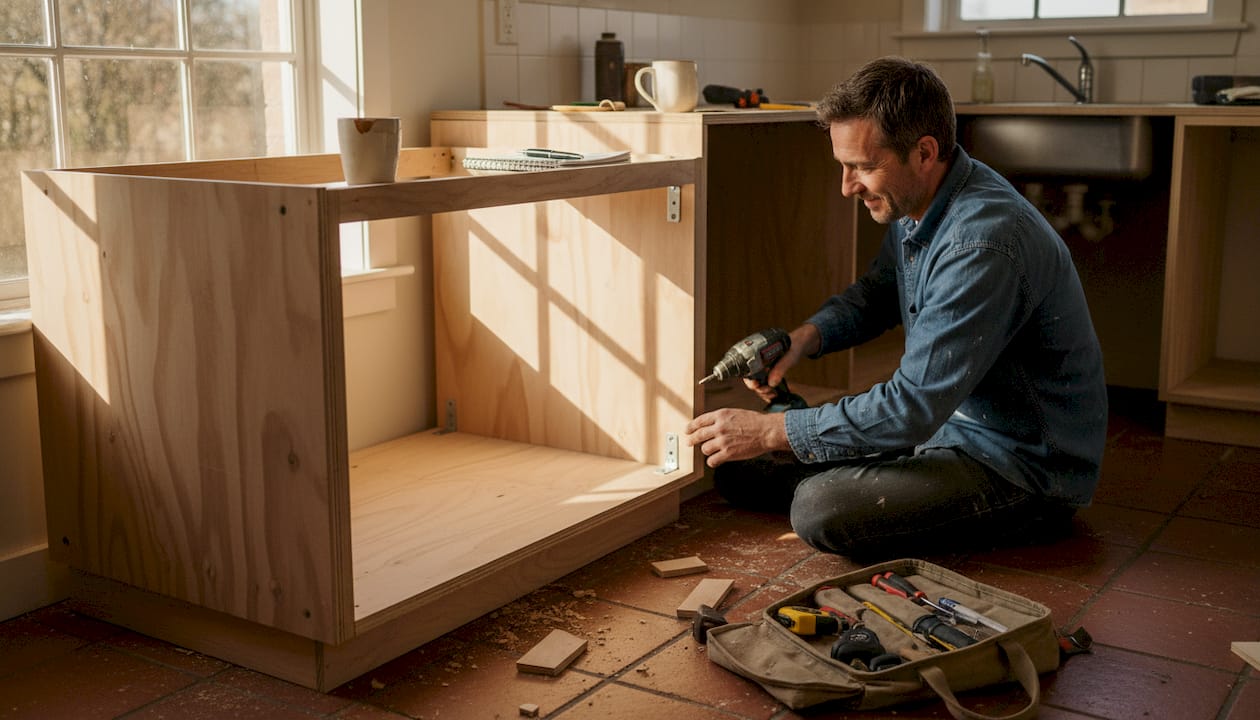
For kitchen carcasses (the structural boxes that units are built from), 18mm+ plywood outperforms MDF in terms of strength, moisture resistance, and longevity. MDF is cheaper upfront, but it swells when exposed to water and does not hold screws as well over time. Plywood costs more initially and delivers significantly better results in a kitchen environment.
For worktops, the choice between quartz, granite, and laminate is one of the most common dilemmas. Here is a straightforward comparison:
Material | Durability | Maintenance | Approximate cost per m² | Sustainability |
Quartz | Excellent | Low | £200 to £400 | Moderate |
Granite | Excellent | Low to medium | £250 to £500 | Moderate |
Laminate | Moderate | Low | £30 to £100 | Variable |
Solid timber | Good | Medium | £150 to £350 | High (FSC-certified) |
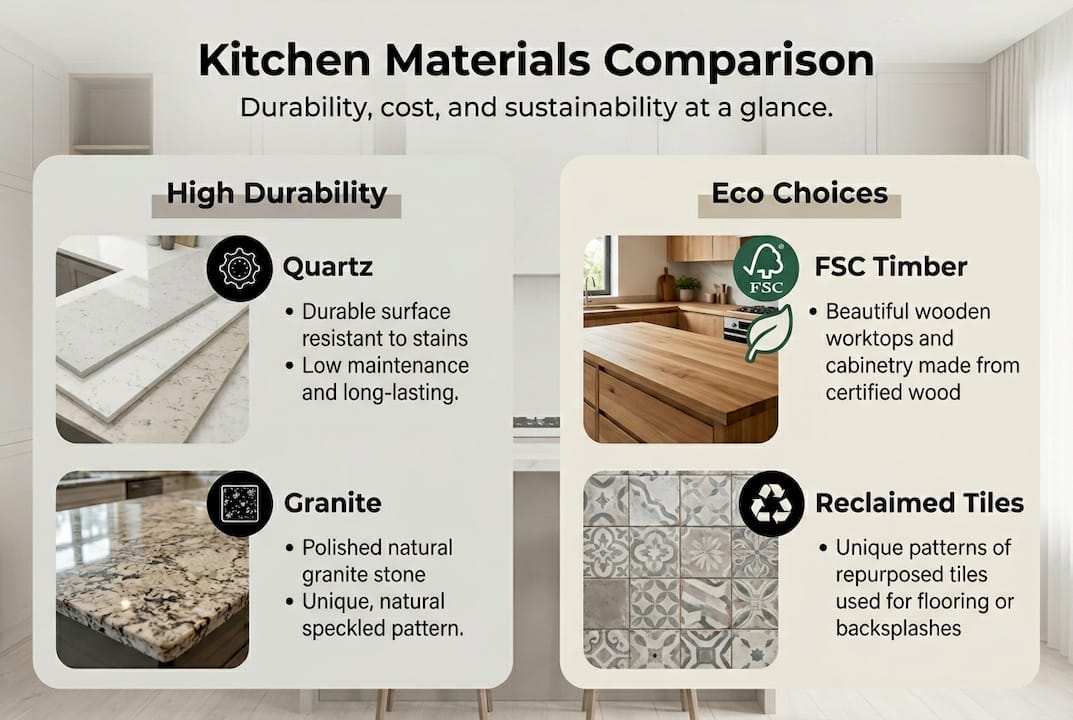
Quartz and granite are the clear winners for performance and longevity. Laminate can work well in lower-traffic areas, but it chips and peels over time in a busy kitchen.
Sustainability is increasingly important to London homeowners, and rightly so. Consider these eco-friendly options:
FSC-certified timber for cabinet doors and shelving, sourced from responsibly managed forests.
Low-VOC paints and finishes, which reduce harmful emissions and improve indoor air quality.
Reusable or recyclable materials, such as reclaimed brick or recycled glass tiles for splashbacks.
Soft-close hinges and drawer runners, which extend the life of your units considerably.
Exploring eco-friendly refurbishment benefits can help you understand how sustainable choices also add long-term value to your property. For a tailored approach to materials and finishes, our bespoke refurbishment services cover every aspect of your kitchen project.
Step-by-step kitchen renovation process
After deciding on materials, it is time to break down the renovation process itself. Understanding the sequence of work helps you set realistic expectations and spot any issues before they escalate.
Here is the typical order of a kitchen renovation:
Strip-out: Remove existing units, appliances, flooring, and any fixtures. This is also when hidden issues such as damp, old wiring, or inadequate pipework are usually discovered.
Structural and layout changes: If you are moving walls, adding a window, or changing the layout significantly, this happens now. Always obtain the necessary permissions first.
First fix (plumbing and electrics): Your plumber and electrician run new pipes, cables, and conduits before walls are plastered or boarded. This stage is invisible once finished, but it is foundational.
Plastering and preparation: Walls and ceilings are made good, skimmed, and left to dry fully before any decoration begins.
Second fix and installation: Units, worktops, appliances, and tiles are fitted. Plumbing and electrical connections are completed.
Finishing: Painting, flooring, lighting, and final snagging. This is where the space truly comes to life.
Important: Never rush drying and ventilation times between plastering and decoration. Painting over damp plaster leads to peeling, mould, and expensive remedial work down the line.
Pro Tip: Use a single main contractor to coordinate all trades. Solo trades without a coordinator increase the risk of scheduling conflicts, poor communication, and quality issues. A coordinated team delivers a smoother, faster, and better-quality result.
Working with coordinated build teams ensures each trade arrives at the right time and that the project keeps moving. Our kitchen and bathroom experts manage this entire process on your behalf, so you do not have to.
Avoiding common pitfalls and ensuring success
Next, let us cover how to minimise risks and get the results you want. Even well-intentioned homeowners fall into predictable traps that cost time, money, and peace of mind.
Here are the five most common pitfalls to avoid:
Skipping the contingency budget: Not adding a 15% contingency is one of the top causes of kitchen project failure. Unexpected costs are not the exception in London renovations; they are the rule.
Choosing materials based on trends: A kitchen designed around a short-lived aesthetic can feel dated within a few years. Prioritise timeless quality over what is fashionable right now.
Underestimating ventilation: Poor ventilation leads to condensation, mould, and damage to units and walls. Specify an extractor fan that is genuinely powerful enough for your cooking habits.
Poor project planning: Starting work without a clear sequence, agreed specification, and signed contract creates confusion and disputes. Every decision should be made before work begins, not during.
Using cheap materials to save money: Cutting costs on carcasses, hinges, or worktops often results in replacements within five years. Investing in quality upfront is almost always cheaper in the long run.
Understanding the builder’s role in renovations helps you appreciate why professional oversight matters at every stage. A thorough refurbishment checklist is also a practical tool for keeping your project on track from start to finish.
The 15% contingency rule deserves special emphasis. On a £25,000 kitchen renovation, that means setting aside £3,750 for the unexpected. It sounds cautious, but experienced contractors will tell you it is simply realistic.
A fresh perspective on London kitchen renovations
Having learnt the essentials, consider this professional viewpoint before you start your own project. After nearly two decades working in West and Central London homes, we have noticed a pattern: homeowners consistently underestimate the age and complexity of what lies behind their kitchen walls.
London’s housing stock is old. Victorian and Edwardian terraces, mansion flats, and converted period properties all carry infrastructure that was never designed for modern kitchens. Old wiring, gravity-fed plumbing, and irregular room shapes are not rare surprises; they are standard features of the city’s homes.
Chasing the latest kitchen trend in this context is genuinely risky. A showpiece design that ignores the underlying infrastructure will cost you more in remedial work than the aesthetic upgrade is worth. The kitchens that perform best over time are the ones built around function, adaptability, and quality materials, not the ones that look most impressive in a showroom.
Investing in future-proofed fixtures, upgraded services, and long-term refurbishment strategies consistently delivers better value than chasing trends. A kitchen that works beautifully for your family every single day is worth far more than one that photographs well but frustrates you in practice.
Pro Tip: Prioritise lasting quality and function over showpiece features. Your kitchen should serve you brilliantly for at least fifteen years.
Transform your kitchen with expert London renovators
You now have the knowledge to plan, specify, and manage a kitchen renovation that truly delivers. The next step is putting that knowledge into action with a team that has the experience to bring your vision to life.
At Tenen Ltd, we have been transforming kitchens across Fulham, Chelsea, Kensington, Chiswick, Hammersmith, and Notting Hill since 2006. Our London kitchen refurbishment services cover everything from initial design and material selection through to final finishing, all coordinated by a single professional team. Explore our full renovation solutions to see how we can make your kitchen renovation a genuinely rewarding experience. Get in touch today for a consultation.
Frequently asked questions
What is the best material for London kitchen units?
18mm+ plywood for carcasses and quartz or granite for worktops offer the best combination of durability, moisture resistance, and long-term value in a busy London kitchen.
How much contingency should I budget for a kitchen renovation?
Allocate at least 15% of your total budget for unforeseen costs, as older London properties regularly reveal hidden issues once work begins.
How can I make my kitchen renovation more sustainable?
Choose FSC-certified timber, low-VOC paints and finishes, and reusable or recyclable elements such as reclaimed tiles to reduce your environmental impact without compromising on quality.
Should I hire multiple trades individually for my kitchen renovation?
It is far better to use a main contractor to coordinate all trades, as solo trades without coordination significantly increase the risk of delays, miscommunication, and substandard results.
Recommended
Comments