
Dormer conversions: Unlock new space and boost home value
TL;DR:
Many West London homeowners overlook the untapped potential of their cramped lofts, which can significantly boost property value through well-designed dormer conversions. Different styles, such as flat-roof, pitched, and L-shaped dormers, offer varying space gains and aesthetic impacts, influencing planning requirements and costs. Proper planning, quality finishes, and local knowledge are essential to maximize investment returns and create functional, attractive additional living space.
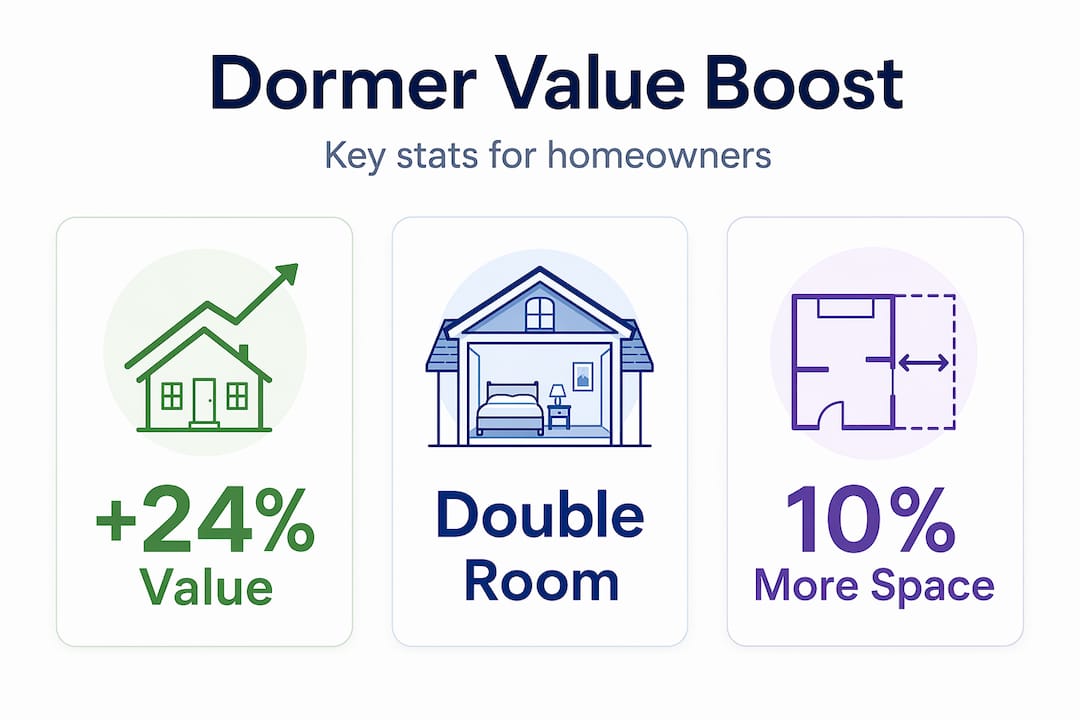
Many West London homeowners sit on untapped potential without realising it. That potential is directly above them, hidden in a cramped, under-used loft. A well-executed dormer conversion can add up to 24% to property value when it includes a double bedroom and bathroom, according to research backed by Nationwide. This guide covers everything you need to know about dormer conversions: what they are, how they compare, what they cost, and how to get yours right from the very start.
Table of Contents
Key Takeaways
Point | Details |
Dormer conversions defined | Dormer conversions add usable loft space and can dramatically improve living standards. |
Huge value boost | Adding a double bedroom and bathroom via dormer conversion can raise property value by up to 24%. |
Multiple style options | Different dormer types suit various housing needs and architectural profiles in West London. |
Step-by-step planning | A structured approach ensures your dormer conversion project is compliant, efficient, and maximises investment. |
Expert advice matters | Local knowledge and tailored guidance can help avoid common pitfalls and unlock full potential. |
What is a dormer conversion?
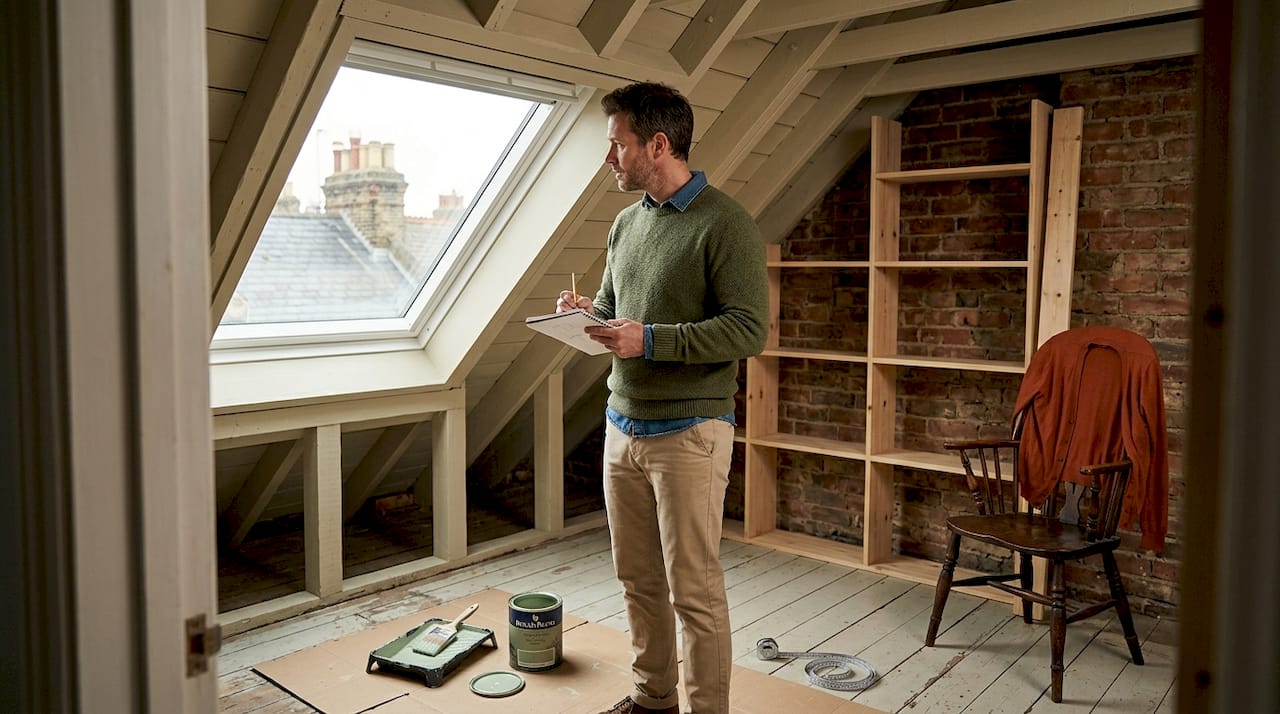
A dormer conversion transforms your existing roof space by extending it outward through a structural addition to the roofline. In simple terms, a dormer is a box-shaped or pitched structure that protrudes vertically from a sloping roof. It creates headroom where there was none, and floor space where the sloping rafters previously made standing impossible.
The result is a proper room, not just a storage area. You gain full-height ceilings, natural light through vertical windows, and a space that feels genuinely liveable. That is a significant shift from the dark, cramped attic most homeowners are familiar with.
Dormer loft conversions are especially well suited to the housing stock across West London. Terraced Victorian and Edwardian properties in areas like Fulham, Hammersmith, Chiswick, and Notting Hill tend to have steeply pitched roofs with decent ridge heights. This geometry means there is real structural room to work with, and a dormer can often be added without dramatically altering the building’s footprint or disrupting the street’s architectural character.
Key features you can expect from a well-designed dormer conversion include:
Full-height ceilings across most of the new floor area
Vertical windows that flood the space with natural light
Insulated walls and roof to meet current energy efficiency standards
New staircase access integrated into the floor below
Options for en-suite bathrooms, storage areas, or Juliet balconies
Research consistently shows that adding usable space via a loft conversion increases property value, making it one of the most financially rewarding home improvements available to London homeowners. For a clearer picture of all available approaches, it helps to browse the full range of loft conversion types before settling on a design direction.
Pro Tip: Before booking a structural survey, measure your current ridge height. If you have at least 2.2 metres from floor to ridge, your home is likely a strong candidate for a dormer conversion without major structural work.
Types of dormer conversions and how they compare
Once you understand the basics, it is important to know the different dormer styles and how they compare. Not all dormers are alike. The style you choose will affect how much space you gain, how the finished room feels, and how the exterior of your home looks from the street.
Flat-roof dormer
This is the most common style in West London, and for good reason. A flat-roof dormer typically extends across the full width of the rear roofline, maximising floor space and headroom. It is clean, functional, and relatively straightforward to build. Most homeowners use this style when they want a bedroom, bathroom, or home office.
Pitched or gabled dormer
A pitched dormer has a small triangular or A-shaped roof on top of the dormer structure. It blends more sympathetically with traditional architecture and is often preferred on properties in conservation areas. The trade-off is that it creates less internal headroom than a flat-roof version.
L-shaped dormer
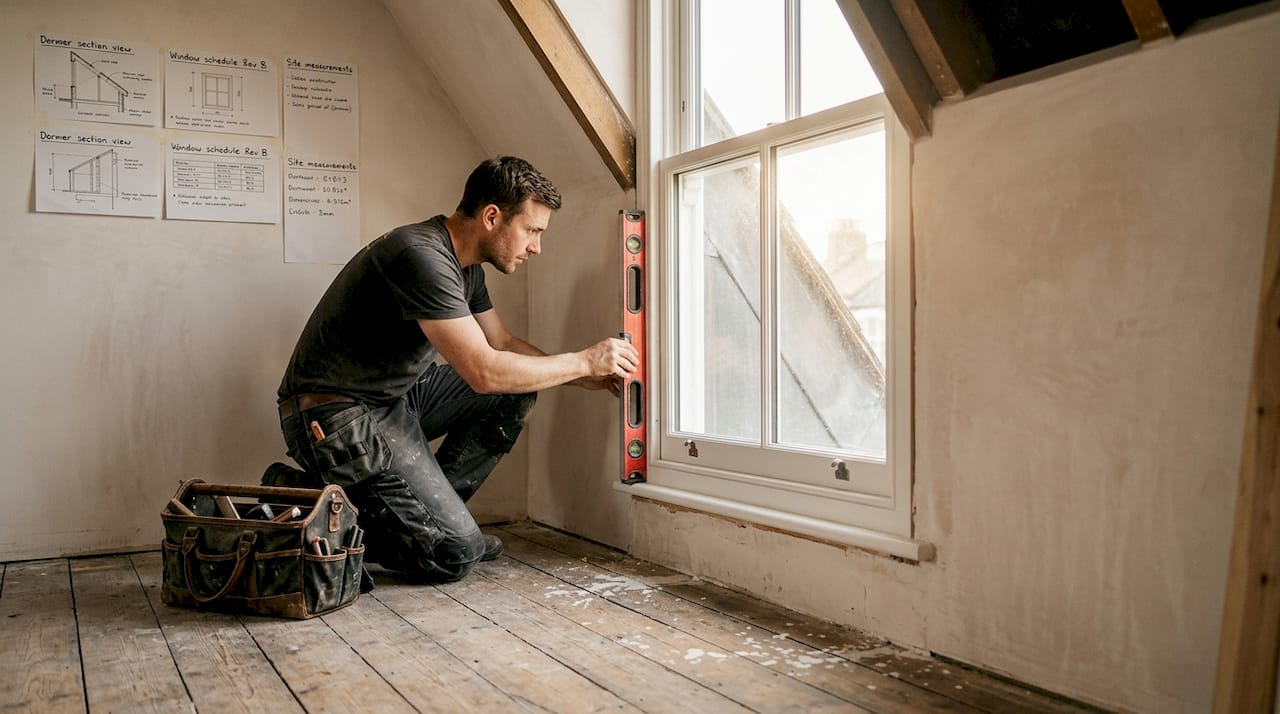
This style is particularly popular on Victorian terraced houses in Fulham and Hammersmith. An L-shaped dormer wraps around both the rear and the side return of the roof, creating a significantly larger footprint. It can effectively double the usable floor area compared to a standard flat-roof dormer, making it ideal for families needing two additional rooms.
Here is a quick comparison of each type:
Dormer type | Space gained | Best suited to | Planning complexity |
Flat-roof dormer | High | Most terraced houses | Moderate |
Pitched dormer | Medium | Period homes, conservation areas | Lower |
L-shaped dormer | Very high | Victorian terraces | Higher |
There are also mansard conversions, which alter the entire rear slope of the roof rather than adding a discrete dormer box. These tend to be more expensive but deliver the maximum possible space. If your property has a hipped roof, the hip-to-gable option extends one sloping side into a vertical wall, which is another route to gaining substantial headroom before adding a dormer.
Key considerations when choosing your dormer style:
Whether your property is in a conservation area or is listed
The orientation of your roof and which direction it faces
How much usable floor area you genuinely need
Your budget, and whether a larger dormer type represents a proportionate return
A double bedroom and bathroom combination can increase property value by up to 24%, so it is worth investing in the dormer style that allows you to fit both functions comfortably.
Pro Tip: If you are torn between a flat-roof and L-shaped dormer, ask your architect to sketch both options alongside a rough budget comparison. The additional cost of an L-shaped dormer often pays back significantly when the property is valued or sold.
The value impact: Dormer conversions as an investment
With types explained, let us look at why so many West London homeowners choose dormer conversions specifically for their investment potential.
Property values in West London are among the highest in the UK. That context matters because improvements deliver stronger absolute returns in high-value markets. When you transform a dark loft into a well-designed bedroom suite, you are not just adding square footage. You are repositioning your home in the market.
The numbers are compelling. Extending floor area by 10% can add up to 5% to your property value. On a West London home worth £900,000, that is a £45,000 uplift from a relatively modest increase in floor area. Add a double bedroom and an en-suite bathroom, and the potential rises toward that 24% ceiling, representing well over £200,000 on the same property.
“A loft conversion that incorporates a large double bedroom and a bathroom can increase the value of a three-bedroom, one-bathroom house by up to 24%.” — Nationwide-backed research via Which?
Here is how different dormer conversion scenarios typically compare for value impact in West London:
Scenario | Added floor area | Estimated value uplift |
Single bedroom, no bathroom | 15 sq m | 8 to 12% |
Double bedroom with en-suite | 25 sq m | 15 to 24% |
L-shaped dormer with two rooms | 35 to 45 sq m | 20 to 28% |
Home office with storage | 12 sq m | 5 to 8% |
These figures are estimates, and real returns depend on your specific property, location, and quality of finish. However, they illustrate why a dormer conversion is consistently ranked as one of the most effective ways to increase home value in London.
For homeowners wanting to explore the broader picture, our expert renovation insights article covers a range of approaches, while our dedicated post on how to maximise loft space value goes deeper into London-specific strategies.
Beyond pure financials, dormer conversions also improve liveability. An extra bedroom relieves pressure on overcrowded family homes. A dedicated home office creates separation between work and family life. Both outcomes have become increasingly valuable to buyers and residents alike across Kensington, Chelsea, and Chiswick.
Practical steps: Planning and executing your dormer conversion
Understanding returns is only helpful if you know how to make these changes happen in practice. Here is a straightforward process to follow from initial concept through to completion.
Assess your loft’s suitability. Measure ridge height, check the pitch angle of your roof, and look at the structural condition of your rafters. A specialist can do this quickly during an initial visit.
Understand your planning position. Many rear dormer conversions on houses fall under Permitted Development rights in London, meaning you may not need full planning permission. However, if your property is in a conservation area, is a flat, or if you plan to extend toward the front of the roof, you will likely need formal consent from your local authority. Always confirm this before spending on design work.
Commission architectural drawings. A good architect will translate your brief into detailed plans that include structural calculations, window positions, staircase layout, and room configurations. This stage is worth investing in properly.
Set a realistic budget. A standard rear dormer in West London typically costs between £35,000 and £65,000, depending on size and specification. Adding an en-suite, high-quality flooring, and bespoke joinery will push costs upward. Build in a contingency of at least 10 to 15% for unexpected structural findings.
Select a contractor with local experience. West London has specific planning sensitivities, conservation requirements, and building stock characteristics that a locally experienced team will navigate far more efficiently than a generalist builder.
Manage the build phase. A standard dormer conversion typically takes 6 to 10 weeks on site. Agree a schedule and communication process with your contractor upfront so you always know what is happening and when.
Sign off and certify. Ensure your contractor arranges Building Regulations approval and provides completion certificates. These documents are essential when you come to sell or remortgage.
Our article on how to transform your West London home with a loft conversion covers this journey in more detail, and our roof extension guidance explains the technical aspects of extending above the roofline. You can also review our full services overview to understand the range of work we cover alongside a loft project.
Adding 10% floor area through a well-executed conversion is one of the most reliable ways to grow your asset in the London market, and the process is far more manageable than many homeowners assume.
Pro Tip: Always request a pre-application consultation with your local planning authority before submitting drawings. This short meeting can prevent costly redesigns by identifying planning sensitivities early.
Our perspective: What most homeowners miss about dormer conversions
After working on loft conversions across West London since 2006, we have noticed a pattern. Homeowners research the broad value uplift figures, get excited about the numbers, and then make decisions that quietly undermine the return they were hoping for.
The most common mistake is under-specifying the finish. A dormer conversion that adds a box room with budget fittings rarely achieves the 20 to 24% value uplift cited in research. That figure is built around a quality double bedroom and a genuinely functional bathroom. When the finish looks like an afterthought, buyers and valuers notice. The space needs to feel like a natural extension of the home, not a later addition.
The second issue is staircase planning. Many homeowners ask for the staircase to be fitted into a tight, awkward space to preserve the floor below. This is understandable, but a steep or cramped staircase makes the new room feel less accessible and genuinely reduces its appeal. A good designer will find a staircase solution that works for both floors without one cannibalising the other.
Local knowledge is another factor that rarely features in national guides. Planning officers in Kensington and Chelsea, for example, have different expectations to those in Ealing or Hammersmith. The materials deemed acceptable for a dormer facing a conservation area in Notting Hill are specific and sometimes surprising. Working with a team that has built in your exact postcode is not just convenient. It actively protects your project from delays and redesigns.
Finally, we see homeowners overlook the importance of dormer conversion insights related to natural light. The positioning and size of roof windows can transform a space from functional to genuinely beautiful. A rear-facing dormer with a wide window that frames a garden view adds emotional value to a room that photographs brilliantly and sells a home faster than almost any other feature.
The real hidden driver of return is not just square footage. It is the quality of the experience a buyer has walking into the finished room.
Explore your dormer conversion options with Tenen Ltd
Thinking about adding a dormer to your West London home? The potential is real, and the process is more straightforward than many homeowners expect when you have the right team behind you.
At Tenen Ltd, we have been delivering specialised dormer conversions across Fulham, Chiswick, Kensington, Chelsea, and Hammersmith since 2006. We handle every stage, from initial feasibility and planning through to the finishing touches, with a single point of contact and a clear project timeline. Whether you want a single bedroom suite or a full L-shaped conversion with two rooms, our team works to your brief and your budget. Explore our full range of London loft experts services, or get in touch to book a no-obligation consultation at your property.
Frequently asked questions
Is a dormer conversion suitable for terraced houses in West London?
Yes, dormer conversions are one of the most common improvements carried out on terraced and period houses across West London, precisely because the roof geometry and ridge heights tend to work well for this type of extension.
How much value can a dormer conversion add?
A loft conversion that includes a large double bedroom and bathroom can increase the value of a three-bedroom, one-bathroom house by up to 24%, according to Nationwide-backed research reported by Which?.
Do dormer conversions require planning permission in London?
Most rear dormer conversions on houses may fall under Permitted Development rights, but properties in conservation areas, flats, and any extension affecting the front roofline will typically require formal planning permission from the local authority.
Are dormer conversions disruptive during construction?
Some disruption is unavoidable, particularly during the structural phase when the roof is opened up, but an experienced professional team will sequence the work carefully to keep your home habitable and the project on schedule.
How long does a dormer conversion typically take?
Most standard dormer conversions in West London are completed within 6 to 10 weeks on site, though more complex L-shaped or multi-room projects can take longer depending on specification and planning conditions.
Recommended
Comments